SIGNALIZED REDUCED CONFLICT U-TURN
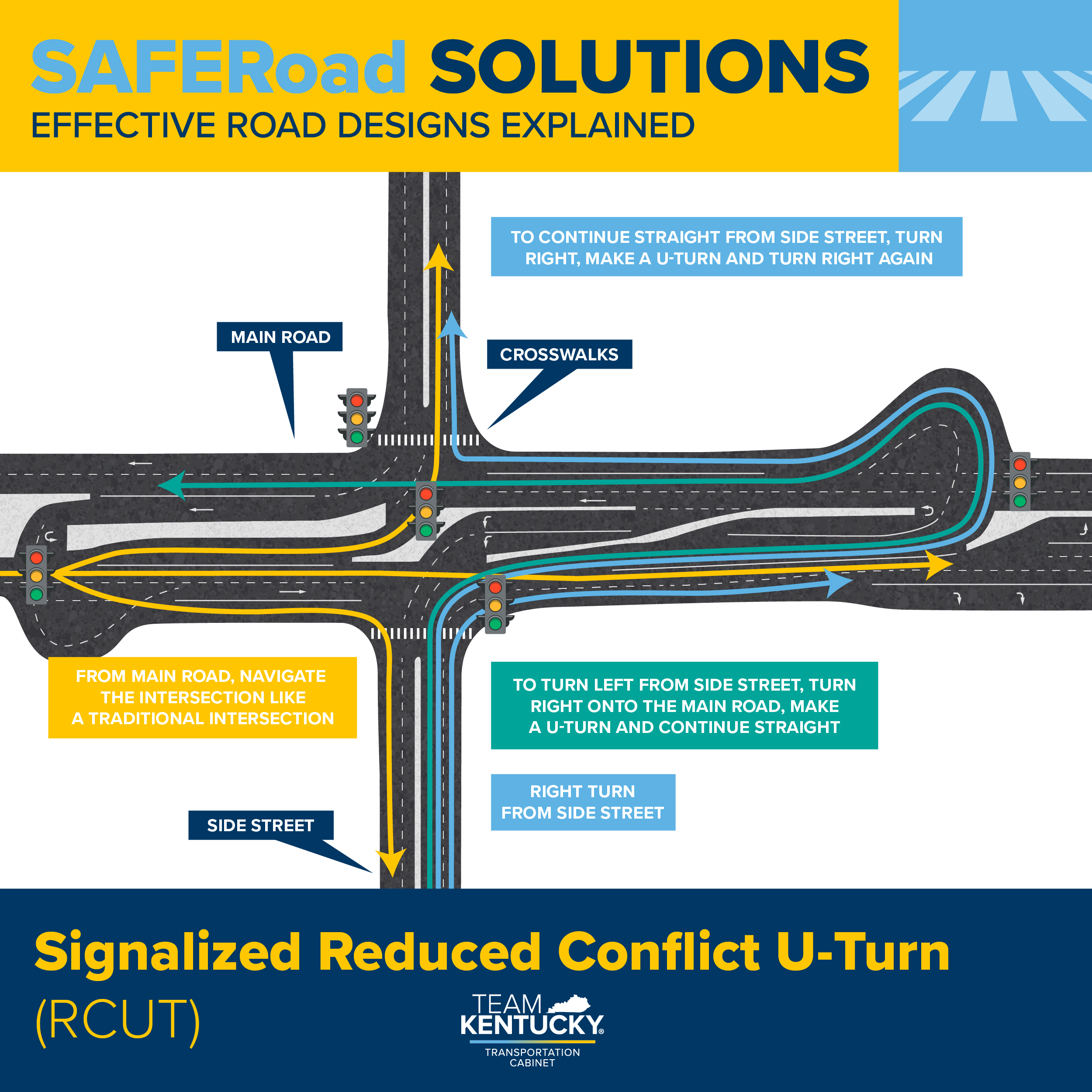
A Signalized Reduced Conflict U-Turn (RCUT) is an innovative four-lane highway intersection design similar to traditional RCUTs to manage higher volumes of traffic. It features one primary intersection paired with two signalized median crossover points to provide more efficient traffic flow.
What are the benefits of a Signalized RCUT?
-
Enhanced safety – The geometry of an RCUT reduces conflict points and lowers the risk of severe crashes.
-
Improved efficiency – On high-volume highways, coordinated traffic signals are used to streamline movements, provide gaps for turning vehicles, and reduce overall delays and wait times.
-
Increased capacity – Strategically placed medians separate side-street and through traffic movements, creating smoother traffic flow and accommodating more vehicles.
-
Supports all users – Signalized RCUTs provide safe crossings for pedestrians, bicyclists, and motorists, making them effective in urban and suburban settings.
When can a Signalized RCUT be used?
Signalized RCUTs are most effective in locations with:
-
Multi-lane, median-divided highways
-
High volumes of through and turning traffic on the main road
-
Moderate to high traffic volumes on the side street
-
Urban or suburban settings with pedestrian, bicycle, or transit activity
How does a Signalized RCUT work?
-
All side-street movements begin with a right turn.
-
Side-street left-turn and through traffic must first turn right, then make a U-turn at a signalized median crossover to complete their movement.
-
Traffic signals are placed at both the main intersection and U-turn crossovers for efficiency on high-volume highways.
-
Signal timing can be coordinated to move large volumes of traffic smoothly along the highway.
-
Pedestrians use crosswalks, while bicyclists may use pedestrian paths or follow roadway laws.